⚡ New Hampshire Insurance Cost Calculator
Quick estimate for New Hampshire residents. Get instant results based on your property details.
New Hampshire Insurance Market Overview
Last updated: July 2026
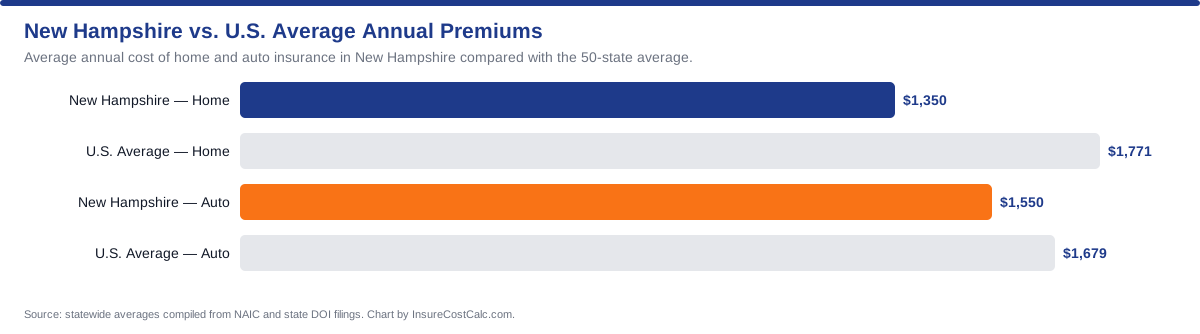
The average cost of home insurance in New Hampshire is $1,350 per year (about $113/month), while the average auto insurance premium runs $1,550 per year. The only state with no mandatory auto-insurance law, though financial responsibility still applies after an at-fault crash.
Premiums are highest around Manchester, Nashua, Concord, Derry, and lower in rural counties where claims frequency is smaller.
How New Hampshire Compares Nationally
New Hampshire ranks #37 of 50 states for home-insurance cost and #33 of 50 for auto insurance. Home premiums here are about 24% below the U.S. state average of $1,771 (-$421), and auto premiums are about 8% below the national average of $1,679 (-$129).
Put together, a typical New Hampshire household carrying both policies budgets about $2,900 per year — roughly $242 per month — before discounts, deductible choices, or flood add-ons.
| Metric | New Hampshire | U.S. Average | Difference |
|---|---|---|---|
| Home insurance / yr | $1,350 | $1,771 | -$421 |
| Auto insurance / yr | $1,550 | $1,679 | -$129 |
| Cost rank (1 = most expensive) | Home #37 · Auto #33 | — | — |
New Hampshire vs. Comparable States
Here is how New Hampshire's averages stack up against comparable states (difference shown relative to New Hampshire):
| State | Home / yr | Auto / yr | Home diff | Auto diff |
|---|---|---|---|---|
| New Hampshire | $1,350 | $1,550 | — | — |
| Oklahoma | $2,950 | $1,750 | +$1,600 | +$200 |
| Texas | $2,950 | $1,950 | +$1,600 | +$400 |
| Wyoming | $1,950 | $1,650 | +$600 | +$100 |
| Connecticut | $1,650 | $1,850 | +$300 | +$300 |
New Hampshire Insurance Cost Snapshot
| Coverage Type | Average Annual Premium | Notes |
|---|---|---|
| Home Insurance | $1,350 | State average |
| Auto Insurance | $1,550 | State average |
| Flood Insurance (NFIP est.) | $950 | Moderate Risk |
New Hampshire's Local Risk Profile
New Hampshire is the only state that does not require auto liability insurance for most drivers (proof of financial responsibility applies after violations), yet nearly 90% of drivers buy it anyway — and rates are among the lowest in the country. Property risks are classic New England: nor'easters, ice dams, and tree-fall claims, with no meaningful hail or hurricane corridor.
💡 New Hampshire shopping tip: Even though coverage isn't mandatory, lenders and common sense require it — and NH rates are low enough that liability-only savings rarely justify going bare.
What Drives New Hampshire Insurance Rates
Several state-specific factors explain why New Hampshire sits where it does on the national cost curve:
- Minimum auto liability law: New Hampshire has no mandatory auto insurance law, though financial-responsibility rules still apply after an at-fault crash.
- Fault system: New Hampshire is an at-fault (tort) state — the driver who caused the crash is responsible for the damages.
- Flood exposure: New Hampshire carries a moderate flood risk, which affects both home-insurance pricing and the value of a separate flood policy.
- Local perils: Only state with no mandatory auto insurance law, but need coverage if cause accident.
- Population & claims density: Urban centers like Manchester concentrate traffic and property claims, pushing rates above rural parts of the state.
Auto Insurance in New Hampshire
New Hampshire does not mandate auto insurance by law, but you must be able to demonstrate financial responsibility if you cause an accident. Most residents carry coverage anyway to protect their assets and avoid out-of-pocket liability.
With New Hampshire auto premiums averaging $129/month (about 8% below the national average), comparing quotes matters here — see our guide to lowering car insurance for tactics that work in any state.
Home Insurance in New Hampshire
A standard New Hampshire homeowners policy (HO-3) covers the dwelling, detached structures, personal belongings, liability, and additional living expenses. Even with New Hampshire's moderate flood profile, remember that standard home insurance does not cover flood damage; a separate flood policy is worth considering near rivers, coasts, or low-lying areas. For the full breakdown of what an HO-3 covers and excludes, read What Is Homeowners Insurance.
Flood Risk in New Hampshire: Moderate
New Hampshire's flood risk is moderate-to-low, but standard homeowners insurance never covers flooding anywhere. Our flood calculator and NFIP guide cover when a separate policy makes sense.
Sample New Hampshire Home-Insurance Budgets
The table below shows illustrative monthly home-insurance estimates derived from New Hampshire's state average of $1,350/year, adjusted for common coverage tiers. These are planning ranges, not quotes — your actual premium depends on your home's specifics.
| Coverage Tier | Est. Annual | Est. Monthly |
|---|---|---|
| Basic (state-minimum style) | $972 | $81 |
| Standard (recommended) | $1,350 | $113 |
| Premium (high coverage) | $1,958 | $163 |
Choosing an Insurer in New Hampshire
Insurance is regulated in New Hampshire by the New Hampshire Insurance Department, which reviews rate filings, licenses carriers and agents, and maintains the complaint database worth checking before you buy. For a full framework on comparing financial-strength ratings and complaint ratios, see how to choose an insurance company.
Filing a Complaint in New Hampshire
If a claim is denied, delayed, or settled unfairly, contact the New Hampshire Insurance Department to open a formal complaint. The regulator reviews whether the insurer followed New Hampshire law and can order corrective action. For what to expect step by step, see our insurance claims process guide.
Go Deeper: Coverage Topics That Apply in New Hampshire
These fundamentals work the same way in every state — we keep the full explanations in one place so they stay accurate and up to date:
- Renters insurance (HO-4) — what it covers and typical cost if you rent in Manchester or anywhere else in New Hampshire.
- Reading your declarations page — verifying Coverage A–E, deductibles, and discounts before you bind.
- Replacement cost vs. actual cash value — how the settlement method changes your payout.
- How to choose an insurance company — financial ratings and complaint data, including the New Hampshire Insurance Department complaint database.
- Umbrella policy calculator — whether your assets justify an extra $1M+ of liability protection.
More Insurance Calculators
New Hampshire Insurance FAQ
The average cost of home insurance in New Hampshire is $1,350 per year ($113/month). Rates vary based on your home's value, location, age, and your credit-based insurance score where allowed. Use our calculator above to get a personalized estimate.
New Hampshire does not have a mandatory auto insurance law, but you must demonstrate financial responsibility if you cause an accident. Most drivers carry insurance anyway to protect their assets.
Flood insurance is not mandatory for most homeowners in New Hampshire, but it's still recommended. Standard homeowners insurance does NOT cover flood damage, and floods can happen anywhere.
New Hampshire ranks #37 of 50 for home-insurance cost and #33 of 50 for auto. Home premiums are about 24% below the national average ($1,771/yr), and auto premiums are about 8% below the national average ($1,679/yr).
Insurance in New Hampshire is overseen by the New Hampshire Insurance Department, which reviews rate filings, licenses insurers and agents, and handles consumer complaints. You can reach it at its official website to file a complaint or verify a carrier's license.
Editorial note: This New Hampshire guide is maintained by the InsureCostCalc editorial team using publicly available rate filings and consumer guidance from the New Hampshire Insurance Department, the National Association of Insurance Commissioners (NAIC), and the Insurance Information Institute (III). Figures are statewide averages and illustrative planning estimates — always confirm with a licensed New Hampshire agent. Last updated July 2026.
More State Insurance Guides
Alabama Insurance
Local rates & requirements
Alabama Insurance
Local rates & requirements
Alabama Insurance
Local rates & requirements
Alabama Insurance
Local rates & requirements
Sources & References
The averages and explanations in this New Hampshire guide are built from publicly available regulatory data, industry research, and guidance from the U.S. Department of Housing and Urban Development (HUD) on property and flood exposure, the National Association of Insurance Commissioners (NAIC), and your state insurance regulator.
Links are provided for verification only. InsureCostCalc.com is not affiliated with, endorsed by, or sponsored by any government agency or organization listed above. See our full references list.