If you rent, your landlord's insurance covers the building — the walls, roof, and structure — but not a single thing you own inside it. Your laptop, furniture, bike, and clothing are your financial responsibility. Renters insurance is the small policy that fills that gap, and at an average cost often under $20 a month, it's one of the highest-value covers available. Yet most renters skip it, usually because of a handful of persistent myths.
Estimate Your Renters Insurance Cost
See what protecting your belongings would run per month.
Open the Home & Renters Calculator →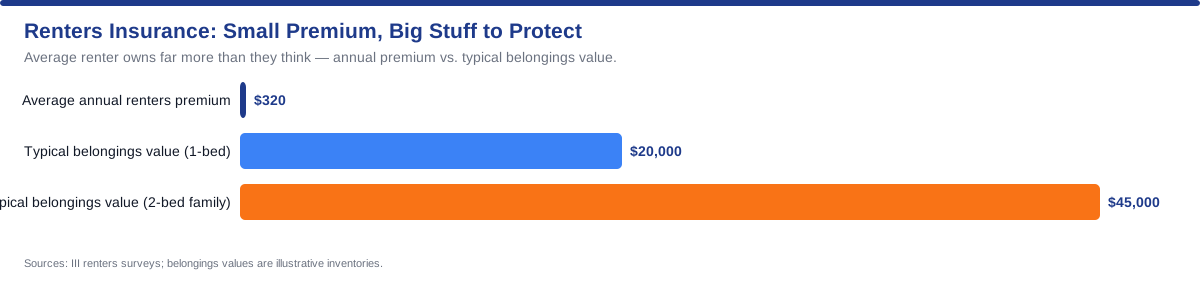
What Renters Insurance Covers
A standard renters policy has three pillars. Personal property pays to repair or replace your belongings after a covered peril (fire, theft, vandalism, certain water damage, liability-related loss). Liability covers you if someone is injured in your unit or you accidentally damage another's property — it can pay legal and medical costs. Additional living expenses (ALE) covers hotel and food bills if a covered event makes your rental uninhabitable.
What It Excludes
- The building itself — that's the landlord's policy; you insure contents, not structure.
- Flood and earthquake — separate policies, as with homeowners.
- High-value items above sub-limits — jewelry, art, and electronics often have per-item caps unless scheduled.
- A roommate's belongings — unless they're a named insured; each adult usually needs their own policy.
How Much It Costs
Renters insurance is cheap because it insures contents, not a structure, and renters' loss exposure is lower. Premiums commonly land between $12 and $25 per month depending on location, coverage amount, deductible, and claims history. Bundling with auto often cuts it further. The price difference between a $15,000 and $30,000 contents limit is usually modest, so don't underbuy to save a few dollars.
Sizing Your Contents Limit
| Step | What to do |
|---|---|
| Room-by-room inventory | List belongings with rough values |
| Sum replacement cost | What it'd cost to buy new today |
| Choose actual cash vs. replacement | RC costs more but pays full price |
| Schedule valuables | Add riders for jewelry/electronics |
Most people underestimate their contents by thousands. A quick inventory before buying prevents being underinsured when it matters.
Myths That Cost Renters
- "My landlord's policy covers me" — it covers the building, never your stuff.
- "I don't own enough to bother" — a modest apartment often holds $15k–$30k of replaceable goods.
- "It's required and expensive" — many leases require it, but it's among the cheapest covers.
- "Theft outside the home isn't covered" — personal property travel with you; a stolen laptop off-premises is typically covered.
How to Inventory Your Belongings (and Why It Matters)
The single habit that makes a renters claim go smoothly is a home inventory - a room-by-room list of what you own and what it would cost to replace. Do it with your phone: walk through each room, video the contents, and photograph receipts for bigger items. Store the file in the cloud (not just on the device that could be stolen). Two details matter. First, decide whether your policy pays replacement cost (buy-new price) or actual cash value (used price minus depreciation) - replacement cost costs a bit more but pays far more after a loss. Second, renters policies sometimes apply an expectation that your limit reflects the insurable value of your contents; under-insuring risks a reduced payout. An inventory turns "I think I had about $20,000 of stuff" into a defensible number.
Liability and Loss-of-Use: The Underrated Protections
Most renters focus on their belongings and miss the two coverages that can matter even more. Personal liability responds if a guest is injured in your apartment - a broken wrist on a wet floor, a dog bite - or if you accidentally damage a neighbor's property. Defense and settlement costs can run into the tens of thousands, far exceeding the value of your furniture. Additional living expenses (loss of use) pays your hotel and restaurant bills if a covered event - a kitchen fire, a burst pipe - makes the unit uninhabitable. Renters often overlook this until they're footing a $3,000 hotel stay themselves. Both are included in a standard policy; confirm the limits are adequate for your exposure.
Roommates and Subletters: Who's Covered?
A renters policy follows the named insured - generally you, not your cohabitants. If your roommate's laptop is stolen, your policy won't pay for it unless they're listed. Each adult roommate should carry their own policy, or be explicitly added as a named insured. The same logic applies to subletters: a subtenant's belongings are their responsibility, and your liability coverage may not extend to injuries arising from their use of the space. Don't assume one policy covers the whole apartment; clarity here prevents a painful denial after a shared loss.
A Sample Renters Policy, Decoded
| Coverage | Typical limit | What it pays |
|---|---|---|
| Personal property | $30,000 | Belongings, replacement cost |
| Liability | $100,000 | Injury/damage you cause |
| Loss of use | $9,000 | Hotel/food if displaced |
| Deductible | $500 | Paid before claims |
This illustrative mix - generous contents, modest liability, and loss-of-use - is a common, well-balanced starter policy for a one- or two-bedroom apartment.
How to Lower Your Renters Premium
Renters insurance is already cheap, but a few moves trim it further: bundle with auto (often the biggest single saving), choose a slightly higher deductible if you could absorb it, install basic safety devices (smoke detectors, deadbolts) that some carriers credit, and avoid tiny coverage gaps by buying the right limit rather than the minimum. Don't slash the liability limit to save a dollar or two - that's the coverage most likely to face a six-figure claim. The efficient play is a healthy liability limit with a modestly higher deductible.
Renters Insurance, Your Lease, and the Security Deposit
Many leases require renters insurance and ask you to name the landlord or property manager as an "interested party" so they're notified if the policy lapses. Provide proof of coverage at move-in to satisfy the lease and avoid a default. Separate from that, your security deposit is not insurance - it covers damage you cause beyond normal wear, not theft of your belongings or liability to others. Tenants sometimes confuse the two; the deposit protects the landlord, while renters insurance protects you. Keep both: a deposit for the lease, a policy for your own risk.
Renters Insurance for Students and Dorms
Students aren't exempt from loss. A laptop, bike, and wardrobe in a dorm or off-campus apartment are just as exposable as in any rental. Many parents' homeowners policy extends some coverage to a child's belongings at school, but limits are often low and claims can count against the parents' record - a separate renters policy for the student is usually cheaper and cleaner. For off-campus rentals, a standalone policy is the standard solution. Either way, a quick inventory of the student's belongings clarifies whether the parents' extension is enough or a dedicated policy is warranted.
What 'Replacement Cost' Pays on a Claim
If your renters policy is replacement-cost (RC) rather than actual-cash-value (ACV), a covered loss pays what it costs to buy the item new today, not its depreciated used value. The practical difference is large: a five-year-old laptop worth $200 used might cost $800 to replace new. RC policies often pay the ACV first and release the depreciation "recoverable" portion once you actually replace the item and show the receipt - so keep those receipts. Choosing RC costs a little more in premium but can mean the difference between rebuilding your life and absorbing a steep loss after a fire or theft.
Renters Insurance and Pet Liability
Your renters liability coverage typically extends to pet-related injuries - a dog bite to a visitor, for example - which can otherwise become a five-figure expense. But some insurers restrict or exclude certain breeds, and a prior incident can raise your rate or limit options. If you have a dog, confirm the policy doesn't exclude your breed and that the liability limit is adequate. Landlords sometimes require proof of pet liability specifically. The cheapest renters policy that quietly excludes your pet is no bargain if the very risk you most need covered is the one left out.
Does Renters Insurance Cover Water Damage?
Coverage for water depends on the source. Sudden, accidental events - a burst pipe, a leaking water heater, a neighbor's overflow that reaches your unit - are generally covered perils under a renters policy. Gradual damage (a slow leak you ignored) and flood or sewer-backup are typically excluded unless you added a specific endorsement. Because "water" is the most common and most disputed renters claim, confirm exactly which water scenarios your policy covers and whether a water-backup endorsement is worth adding (it's usually inexpensive). Knowing this before a leak - not during one - is what turns a confusing claim into a paid one, and it's the gap most renters never think to ask about.
Meeting a Landlord's Required Limits
Many leases specify a minimum liability limit (often $100,000 or $300,000) and sometimes a minimum contents limit. When buying, set your limits at or above the lease requirement - not the bare minimum you'd choose - so you satisfy the contract and stay covered. If the required liability is higher than a basic policy offers, simply raise that one limit; liability is inexpensive to increase relative to the protection it adds. Confirm the landlord is listed as an interested party so they receive proof, and keep a copy of the dec page to hand over at move-in.
Related Articles
What Is Homeowners Insurance
Coverage, perils, and policy structure
Bundle Home & Auto
When combining policies saves or costs
How to Lower Car Insurance
Proven ways to cut your auto premium
How to Choose an Insurance Company
Compare financial strength and complaints
Explore State Guides
New York Insurance
Local rates & requirements
California Insurance
Local rates & requirements
Texas Insurance
Local rates & requirements
Frequently Asked Questions
No. The landlord's policy covers the building structure only. Your furniture, electronics, clothing, and other possessions are your responsibility. Renters insurance is what protects them, plus your liability if a guest is injured in your unit.
Enough to replace your belongings at today's prices — typically the sum of a room-by-room inventory. Most renters land between $15,000 and $30,000 in contents coverage, plus liability of $100,000–$300,000. Scheduling high-value items separately avoids per-item sub-limits.
Usually yes. Even modest apartments contain thousands of dollars of goods, and the liability piece protects you from far larger claims if someone is hurt on your premises. At often under $20/month, the premium is small relative to the exposure it removes.
Generally only the named insured's belongings. Each adult roommate should have their own policy, or be explicitly added. Don't assume a policy taken out by one tenant covers a cohabitant's property after a loss.
Yes, and it's one of the easiest savings moves. Adding a renters policy to an existing auto policy with the same carrier commonly triggers a multi-policy discount on the larger auto premium, often nearly paying for the renters policy itself.
Related Tools
Home & Renters Calculator
Estimate renters insurance cost
Car Insurance Calculator
Estimate your monthly premium
Should You Bundle?
The real multi-policy math
Data sources: NAIC, Insurance Information Institute (III). Last updated: July 2026. This article is original editorial content for educational purposes and does not constitute insurance advice; review your actual policy for binding terms.