What Flood Insurance Is — and Why You Need It Separately
Flood is the most common and costly natural disaster in the U.S., yet it is excluded from every standard homeowners and renters policy. Flood insurance is purchased on its own, either through the federal National Flood Insurance Program (NFIP) or a growing private market. "Flood" is broadly defined to include storm surge, overflow of inland waterways, and even water that enters from the ground — so a basement seepage event after heavy rain can qualify even when your home policy would not.
How This Calculator Works
The estimator asks for the variables that set flood pricing: your FEMA flood zone, home value, state, chosen building coverage limit, whether you have a basement or finished lower level, and the program type (NFIP, private, or excess). It returns an annual and monthly premium, compares NFIP vs. private, tells you whether coverage is mandatory given your zone, and shows the 30-year cumulative risk percentage that motivates the purchase.
Reading Your FEMA Flood Zone
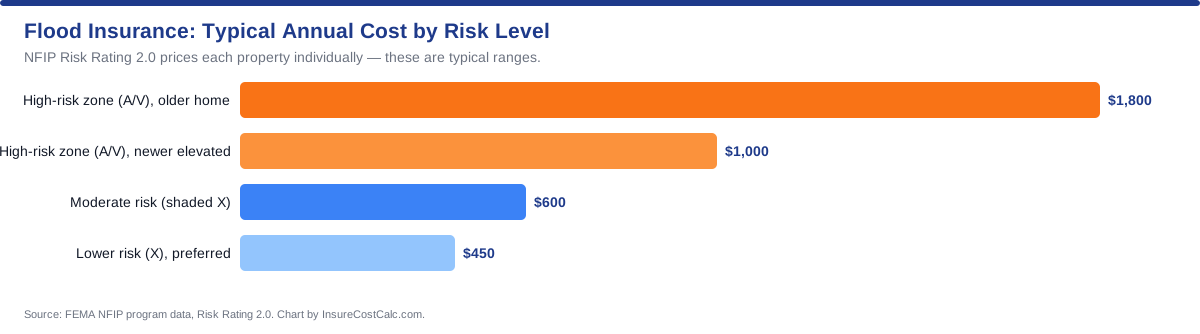
- Zone A / AE: high-risk "Special Flood Hazard Area" — a mortgage lender will require flood insurance.
- Zone V / VE: coastal high-risk with wave action — typically the most expensive ratings.
- Zone B / X (shaded): moderate risk; coverage is optional but common.
- Zone X (unshaded): low risk — the "preferred" tier with the lowest premiums, yet ~25% of all flood claims come from outside high-risk zones.
NFIP Limits, Gaps, and the Waiting Period
The NFIP caps residential building coverage at $250,000 and contents at $100,000, and it pays contents on an actual-cash-value (depreciated) basis. It also excludes temporary living expenses and finished-basement improvements. Most importantly, a new policy carries a 30-day waiting period before it takes effect — you cannot buy it the day before a storm. Private flood insurance can offer higher limits, replacement-cost contents, and sometimes shorter waits, but lacks the government's catastrophic-year backing.
Methodology and Assumptions
This tool produces an educational estimate, not a bound quote. Real NFIP premiums are set by FEMA's risk-rated methodology and depend on your specific elevation, structure, and community flood-map status; private quotes vary by carrier. Use the output to understand your exposure and likely range, then confirm with an agent or the NFIP flood service center before purchasing.
Reading Your Estimate
The calculator returns an annual and monthly premium and compares NFIP against private. Read the "mandatory" flag first — if you're in Zone A/AE/V/VE with a federally backed mortgage, coverage isn't optional. The 30-year risk percentage reframes the decision: over a 30-year mortgage, the cumulative chance of a flood event at your property is far higher than the annual figure suggests, which is why even Zone X buyers often choose to carry it.
Mandatory vs. Optional — and Why Optional Still Matters
Lenders force flood insurance only in Special Flood Hazard Areas, but roughly a quarter of all flood claims occur outside them. A few inches of water can cause five-figure damage to flooring, drywall, and appliances. For most homeowners the annual premium is a fraction of a single claim, making the expected-value case strong even where it isn't required.
Lowering Your Flood Premium
- Elevation: raising the structure or mechanicals above the base flood elevation is the single biggest rate lever.
- Mitigation features: flood vents, sump pumps with backup, and flood-resistant materials can earn credits.
- Coverage choices: a higher deductible lowers the premium; content replacement-cost (via private) avoids depreciation.
- Community rating: participating communities can qualify residents for NFIP discounts.
Common Mistakes
- Waiting for a storm: the 30-day NFIP waiting period means last-minute buys don't activate in time.
- Assuming homeowners covers it: it never does — a costly surprise at claim time.
- Under-insuring contents: NFIP's $100k cap and ACV basis often fall short of replacement.
A Sample Scenario
A $400,000 home in Zone X (low risk) might carry an NFIP premium around $500–$800/year for $250k building / $100k contents — modest for the protection. Move the same home into Zone AE with a mortgage and coverage becomes mandatory, with the premium climbing based on elevation; a private policy might offer higher contents limits and replacement-cost basis at a different price. The calculator's NFIP-vs-private comparison shows both sides so you can choose.
🌊 Flood Insurance Estimator
Flood damage is NOT covered by standard homeowners insurance. Estimate your flood insurance premium based on FEMA flood zone and property details.
Related Articles
FEMA NFIP Flood Insurance
National flood program basics
The Insurance Claims Process
Step-by-step from filing to payout
How to Choose an Insurance Company
Compare financial strength and complaints
Read Your Declarations Page
Decode your policy summary
Flood Insurance FAQ
Flood insurance is mandatory if: (1) Your home is in a Special Flood Hazard Area (SFHA / Zone A or V) AND you have a federally backed mortgage. Lenders will require it. Even if it's not mandatory, anyone can buy flood insurance and ~25% of all flood claims come from outside high-risk zones.
The NFIP (National Flood Insurance Program) covers: (1) Building property up to $250,000 (for residential), (2) Personal property (contents) up to $100,000. It does NOT cover: temporary living expenses, basement improvements (finished walls, flooring), or business interruption. Most policies have a 30-day waiting period before coverage takes effect.
Private flood insurance can offer: (1) Higher coverage limits (above $250K/$100K), (2) Lower premiums for some properties, (3) Faster claims processing, (4) Replacement cost coverage for contents (NFIP pays actual cash value). However, NFIP has government backing and is more stable during catastrophic years. Compare both using our calculator.
Only minimally. NFIP covers building elements in a basement such as foundation, plumbing, and electrical systems, but generally excludes finished walls, flooring, and personal belongings stored there. That is why a finished basement flooded by a few inches can produce a frustratingly small payout — consider private flood or separate contents coverage if your lower level holds valuables.
Yes. Renters can buy contents-only flood policies through NFIP or private markets to protect belongings, even though they don't own the structure. Given that a ground-floor apartment can flood and ~25% of claims come from low-risk zones, renters in flood-prone areas often find the premium well worth the protection.
After you file a proof-of-loss within 60 days, NFIP typically aims to settle within a few weeks to a couple of months, though catastrophic widespread events can slow the process. Private carriers vary. Document damage thoroughly with photos and receipts, and keep records of any emergency mitigation you perform, since that supports your claim.
Increasingly, yes. FEMA's risk-rated methodology prices policies to reflect each property's true flood probability, so homes in areas seeing more intense rainfall or coastal surge have seen sharper increases. This makes shopping NFIP vs. private, raising deductibles, and investing in mitigation credits more valuable than ever for managing the cost.
Getting Flood Coverage: 5 Steps
- Find your FEMA zone. Your flood map and zone determine both whether coverage is mandatory and how it's priced — pull this before quoting.
- Decide NFIP vs. private. NFIP offers government backing and standardized terms; private can give higher limits and replacement-cost contents. Compare both with the calculator.
- Choose the right limits. NFIP caps at $250k building / $100k contents; if your rebuild or belongings exceed that, layer private or excess flood on top.
- Buy early. NFIP's 30-day waiting period means you can't wait for a storm warning — purchase well before hurricane or rainy season.
- Document and mitigate. Keep a home inventory and consider elevation or flood vents; mitigation can lower premiums and reduce future damage.
Because roughly a quarter of flood claims come from outside high-risk zones, the question isn't only "am I required to buy it" but "can I afford a five-figure surprise" — for most homeowners the answer points to carrying it.
Key Takeaways
- Standard policies never cover flood. It must be bought on its own through NFIP or private markets — a common and costly surprise at claim time.
- Risk is broader than the map suggests. About a quarter of all flood claims come from outside high-risk zones, so low-risk homeowners aren't truly exempt.
- Mind the waiting period. NFIP's 30-day delay means you cannot buy coverage once a storm is forecast; purchase well before season.
- Know the limits. NFIP caps at $250k building / $100k contents; private or excess layers extend protection if your exposure is higher.
Editorial note: This page is original educational content intended to explain flood insurance and how our estimator works. It is not a binding quote or insurance advice. NFIP terms, private offerings, and community flood-map status change over time, so verify current details with the NFIP flood service center or a licensed agent before purchasing, and never wait for a storm warning given the 30-day waiting period.
Key Terms to Know
- Special Flood Hazard Area (SFHA)
- FEMA Zones A and V; flood insurance is mandatory here with a federally backed mortgage.
- Base Flood Elevation (BFE)
- The computed elevation of floodwaters with a 1% annual chance; rating hinges on it.
- Actual cash value
- Depreciated payout; NFIP pays contents this way unless you choose replacement-cost private cover.
- Waiting period
- NFIP's 30-day delay before a new policy takes effect — buy before storm season.
- Excess flood
- Coverage above NFIP's $250k building / $100k contents caps, via private or excess layers.
📎 You Might Also Need
Based on your flood insurance calculation, you may also want to estimate these costs:
People Also Ask About Flood Insurance
Do I need flood insurance if I'm not in a flood zone?
About one in four NFIP claims comes from outside high-risk zones, and standard homeowners policies exclude flood entirely. If you live anywhere with heavy rain, snowmelt, or near water, a separate policy is worth considering.
Does homeowners insurance cover flood damage?
No. Flood is specifically excluded from standard home and renters policies. "Flood" means water covering normally dry land; you need a standalone NFIP or private flood policy for that risk.
What does NFIP not cover?
The NFIP generally excludes temporary living expenses, damage to outdoor property (decks, fences, pools), and most basement improvements and contents. Coverage for finished basements is limited compared to upper floors.
Sources & References
Our flood insurance estimates and explanations are built from publicly available regulatory data, industry research, and guidance from the U.S. Department of Housing and Urban Development (HUD) on property and flood exposure. These figures are planning estimates only.
Links are provided for verification only. InsureCostCalc.com is not affiliated with, endorsed by, or sponsored by any government agency or organization listed above. See our full references list.