A claim is the moment an insurance policy either proves its worth or exposes its fine print. Most disputes are not about whether coverage exists — they are about documentation, timing, and expectations. Understanding the sequence before you need it lets you act fast and avoid the avoidable delays that quietly cost policyholders thousands.
Know Your Coverage Before You Claim
Surprises at claim time usually come from gaps you didn't know existed. Estimate and review your costs first.
Open the Home & Renters Calculator →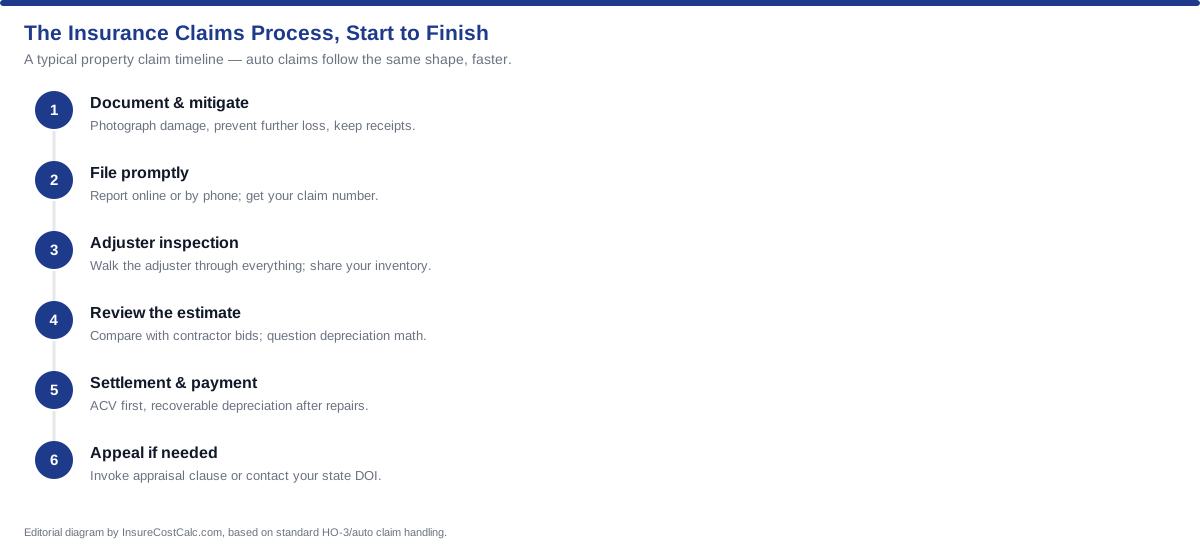
Step 1: Notify the Insurer (First Notice of Loss)
The clock starts the moment you report a loss. Most policies require "prompt" notice, and many let you open a claim by phone, app, or web form. Give the basics: what happened, when, where, and a preliminary sense of the damage. You do not need a final repair estimate to start — you need to start. Delaying notice is one of the few things that can jeopardize coverage outright, especially if the delay hurts the insurer's ability to investigate.
Step 2: Document Everything
Before anything is moved or repaired, photograph and video the damage from multiple angles. Write down the date, time, and a plain-language description of the event. For property claims, compile receipts, serial numbers, and a home inventory if you have one. For auto claims, get the other driver's information and a police report if one was filed. The adjuster's job is easier — and your payout faster — when your evidence is organized. A claim file folder (digital or physical) with a timeline saves enormous friction later.
Step 3: The Adjuster and the Inspection
The insurer assigns an adjuster — the person who investigates and values your loss. They may inspect in person, request photos, or use a virtual inspection. Be present if you can, point out hidden damage (water behind walls, suspension issues after a collision), and share your documentation. If you disagree with the adjuster's scope, you have the right to point to your evidence and ask for a revised estimate. For large or complex losses, hiring your own independent estimator is a legitimate, often worthwhile step.
Step 4: The Estimate, Deductible, and Depreciation
The insurer calculates a settlement based on your policy's coverage basis. On a replacement-cost home policy, you're typically paid the actual cash value first (minus depreciation), with the depreciation recovered once you actually repair. On a cash-value policy, depreciation is never recovered. Your deductible is subtracted from every payment. Understanding these mechanics prevents the shock of a "smaller than expected" check — it was never going to equal the headline coverage limit.
Step 5: The Payout Decision
The insurer either approves, partially approves, or denies. An approval comes as a settlement offer, often with a window to accept. A partial approval usually means the insurer disagrees on scope or items — respond with evidence rather than anger. A denial arrives with a stated reason tied to your policy language; read it carefully, because denials are sometimes based on a misread of the facts or an exclusion that a well-documented record can overcome.
Step 6: If You Disagree — Appeals and Appraisal
Every state gives policyholders a dispute path. Start with the insurer's internal appeals and your state insurance department, which handles consumer complaints at no cost. Many policies include an appraisal clause — a formal process where each side names an appraiser and a neutral umpire settles the value of the loss. For genuinely bad-faith conduct, state insurance laws provide remedies. Knowing these levers before a fight begins changes how the fight goes.
Typical Timelines
| Stage | What to expect |
|---|---|
| First notice of loss | Same day or within a few days of the event |
| Adjuster assignment | Usually 1–5 business days |
| Inspection & estimate | Days to a few weeks depending on complexity |
| Settlement offer | Often within 15–30 days for straightforward claims |
| Dispute / appraisal | Weeks to months if contested |
Catastrophe-scale events (a major hurricane) slow everyone down because adjusters are overwhelmed; filing early and documenting thoroughly matters even more then.
Mistakes That Delay or Sink Claims
- Waiting to report — "prompt notice" is a real policy condition.
- Throwing away damaged items before the adjuster sees them.
- Starting permanent repairs too early without photographic evidence.
- Accepting the first number without reviewing the scope line by line.
- Assuming flood or earthquake is covered — both are typically separate policies.
Special Situations: Catastrophe (CAT) Claims
After a widespread event - a hurricane, wildfire, or major hailstorm - thousands of claims land at once, and normal timelines stretch. Insurers often invoke expedited or streamlined processes: advance payments (a fast partial sum so you can start repairs or cover living expenses), mobile claim centers, and virtual inspections. File immediately even if you can't yet assess every detail; you can supplement the claim later as more damage appears. Keep a separate folder for CAT claims, because roof and water damage from a storm can emerge weeks after the wind passes. Document everything you can before any temporary repairs, and photograph the roof from the ground if it isn't safe to climb.
What to Do If Your Claim Is Denied
A denial is the start of a process, not the end. First, read the denial letter and the exact policy language it cites - denials often rest on a specific exclusion or a question about cause. Then:
- Request the denial in writing with the specific policy provisions cited.
- Submit a rebuttal with documentary evidence - photos, receipts, contractor estimates, weather reports.
- File an internal appeal with the insurer's designated appeals channel.
- Escalate to your state insurance department, which handles consumer complaints at no cost and has leverage over licensed carriers.
- Consider a public adjuster or attorney for large losses - a public adjuster works for you (for a fee) to value the loss; an attorney is appropriate for bad-faith or disputed-coverage cases.
Many denials are reversed with better documentation. The insurer's first answer is negotiable.
Getting a Fair Payout on a Total Loss
A total loss - a home destroyed or a vehicle written off - is where valuation disputes peak. On a replacement-cost home policy, you're owed enough to rebuild to like kind and quality, and the depreciation held back is released once you actually rebuild. For an auto total loss, the insurer pays actual cash value (market value minus deductible), not the loan payoff or a new-car price. If their number seems low, pull comparable sales of similar vehicles in your area and present them; diminished-value claims may apply if your repaired car is now worth less. Never sign a settlement releasing all future claims until you're sure the scope is complete - hidden damage after a fire or collision is common.
A Claim Documentation Log (Template)
| Field to record | Example |
|---|---|
| Date & time of loss | July 3, 2026, 9:15 p.m. |
| Claim number | CLM-2026-004851 |
| Adjuster name & contact | J. Rivera, ext. 4421 |
| Date evidence sent | July 5 (photos + receipts) |
| Settlement offered / paid | $18,400 on July 22 |
A simple log turns a chaotic event into a paper trail - and a paper trail is what wins disputes.
Working With a Public Adjuster
A public adjuster is a licensed professional who represents you (not the insurer) in valuing and negotiating a claim, typically for a fee of a percentage of the settlement. They're most useful for large, complex, or disputed losses where their expertise can surface scope the insurer's estimate missed. For small, straightforward claims, the fee rarely pays off. If you hire one, confirm they're licensed in your state, understand the fee structure in writing, and know that you can still communicate with your insurer. A public adjuster can level the playing field on a contested claim - but weigh the cost against the likely recovery before signing.
Casualty-Loss Records and Your Taxes
Beyond the insurance claim, keep thorough records of any loss - photos, estimates, the insurer's settlement, and unreimbursed out-of-pocket costs - because some losses may have tax implications (subject to current law and thresholds). The same documentation that wins your claim also supports any casualty-loss treatment you might be eligible for. Store everything in one folder, digital and physical, for at least several years. Good records protect you twice: they strengthen the insurance settlement and they substantiate anything you later report. Don't discard damaged items or receipts the moment a check arrives.
After the Claim: Reviewing the Experience
Once a claim closes, take a few minutes to record how it went: was the adjuster responsive, was the payout fair, did the insurer communicate clearly? This review belongs in the same file as your policy and dec page. It directly informs the next renewal - if the claim experience was poor despite a low premium, that's a signal to weigh service more heavily when you next shop, since a cheap policy that fights you after a loss isn't cheap. The claim is the moment a policy proves itself, and your notes turn that experience into better decisions next time rather than a vague memory you can't act on when it matters.
Related Articles
Read Your Declarations Page
Decode your policy summary
How to Choose an Insurance Company
Compare financial strength and complaints
How to Lower Car Insurance
Proven ways to cut your auto premium
Deductible vs. Premium
The trade-off that sets your cost
Explore State Guides
Texas Insurance
Local rates & requirements
Florida Insurance
Local rates & requirements
California Insurance
Local rates & requirements
Frequently Asked Questions
Policies require notice "as soon as practicable" or within a stated window, and state laws set their own limits for certain claims. Don't wait for a repair estimate — report the loss promptly, then refine the details. The safest rule is to notify the insurer within a few days of discovering the damage.
On a replacement-cost policy, insurers commonly pay actual cash value first — the cost minus depreciation — and release the depreciation "recoverable" portion after you complete the repair and submit receipts. If your policy is cash-value based, that depreciation is not recoverable at all. The deductible is also subtracted from the payment.
Read the denial letter and the cited policy language. Many denials are contestable with better documentation or a clearer explanation of the loss. File an internal appeal, then escalate to your state insurance department's consumer-complaint process at no cost. For value disputes, the policy's appraisal clause may apply.
Yes. You are not required to accept the insurer's chosen vendor. For significant losses, hiring your own licensed contractor or independent estimator to produce a scope of work is common and can surface items the insurer missed. Share that estimate with the adjuster as evidence during negotiation.
Generally no. Standard homeowners and renters policies exclude flood and earthquake; those require separate policies (flood insurance is available through the NFIP and private markets). If water entered from the ground up after a storm, that is usually flood, not a covered "water backup" or "wind-driven rain" peril — a distinction that surprises many claimants.
Related Tools
Home & Renters Calculator
Estimate home insurance cost
Flood Insurance Calculator
Estimate NFIP & private flood cost
Car Insurance Calculator
Estimate your monthly premium
Data sources: NAIC, Insurance Information Institute (III). Last updated: July 2026. This article is original editorial content for educational purposes and does not constitute insurance advice; consult a licensed agent or your state insurance department for claim-specific guidance.