What Life Insurance Is — Term vs. Whole
Life insurance replaces lost income and covers obligations for the people who depend on you. Term life covers a fixed period (10–30 years) and pays a death benefit only if you die during the term — it is inexpensive and ideal for covering working years, a mortgage, or college costs. Whole (permanent) life covers you for life and builds a cash value you can borrow against, but costs substantially more. For most families with a finite need, term is the efficient choice and whole life suits estate-planning or permanent-obligation situations.
How This Calculator Works
The estimator applies the inputs underwriters weight most: your age, gender (women typically pay 15–30% less due to longer life expectancy), coverage amount, smoking status, policy type and term length, and health class (Preferred Plus down to Substandard). It returns a monthly premium, the 20-year total cost, the extra annual cost if you smoke, and a tailored recommendation — so you can see how each lever moves the price.
How Much Coverage You Actually Need
A widely used framework is 10–15× annual income, then layer on: paying off all debts including the mortgage, funding children's education, covering final expenses ($15k–$25k), and replacing income for 10+ years. The right number is personal — a dual-income household with no kids may need little, while a single breadwinner with young children may need a large multiple. Use the calculator to test coverage amounts and watch the premium respond.
Why Age and Health Dominate the Price
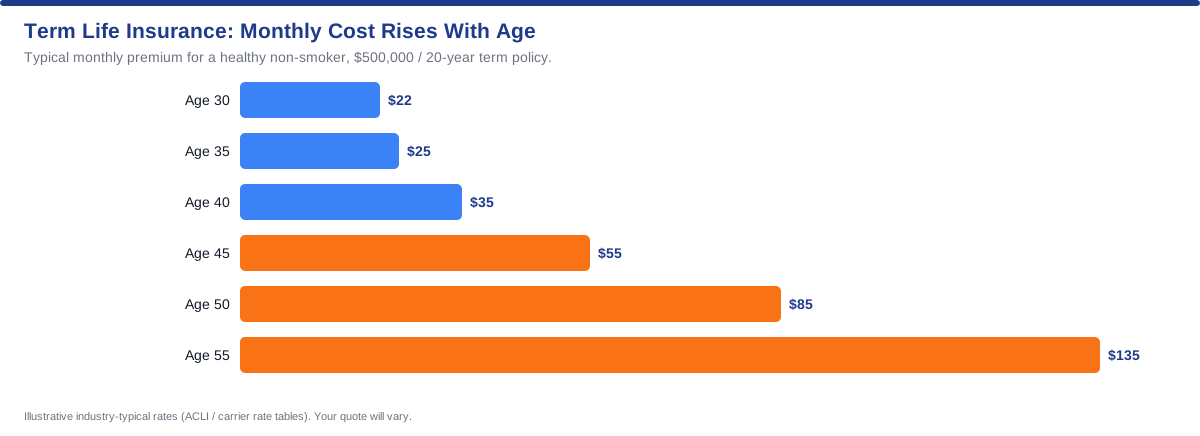
Underwriting risk rises with age and health conditions, so premiums climb roughly 8–12% per year of age and jump sharply for smokers and lower health classes. Locking in a long level term while you're young and healthy freezes a low rate for decades. Many healthy applicants under 60 now qualify for "no-exam" accelerated underwriting using prescription, motor-vehicle, and medical-database records instead of a paramedical visit.
Methodology and Assumptions
This tool returns an educational estimate, not a bound offer. Actual premiums depend on the specific insurer, full medical underwriting, riding exclusions, and riders you choose. We apply representative rate relationships by age, health class, and tobacco status; your real quote will vary. Confirm with a licensed agent before purchasing.
Reading Your Estimate
The calculator's monthly figure is the cost of the death benefit alone; the "20-year total cost" multiplies it out so you can see the true commitment. The "if you smoke" extra shows the surcharge for tobacco, and the recommendation reflects the level of term that typically fits your age and amount. Compare the term quote against the whole-life quote in the results to see how dramatically permanent coverage costs more for the same face amount.
How Much Is Enough — With Examples
A household with a $300k mortgage, $50k in other debt, two young kids, and one breadwinner earning $80k might target $500k–$1M: enough to clear the mortgage, replace roughly a decade of income, and fund college. A dual-income couple with no kids and no mortgage may need little beyond final expenses. The right number is personal, which is why testing coverage amounts in the calculator is more useful than a generic rule.
Term vs. Whole: Matching the Tool to the Need
Use term to cover temporary, finite obligations — working years, a mortgage, college. Use whole life when you have a permanent need (estate liquidity, a special-needs dependent, or business succession) or want forced savings. For most families, layering term policies of different lengths is cheaper than one permanent policy and avoids overpaying during low-need years.
Common Mistakes
- Buying only what the employer offers: group coverage ends with the job and is rarely portable.
- Waiting: premiums rise ~8–12% per year of age; lock in young.
- Naming the estate: causes probate delays; name a person or trust as beneficiary.
- Under-insuring: a single income multiple rarely captures mortgage + education + income replacement.
A Sample Scenario
A healthy 35-year-old non-smoker might pay roughly $25–$40/month for a 20-year, $500k term policy, totaling $6k–$9.6k over the term — a small price to replace a decade of income. The same person at 50 could pay two to three times as much for the same coverage. That gap is why the calculator's age slider is so persuasive: the earlier you buy, the cheaper the decades of protection.
💼 Life Insurance Premium Estimator
Get an instant estimate for term or whole life insurance based on your age, coverage amount, and health profile.
Related Articles
How Much Life Insurance
DIME and human-life-value methods
How to Choose an Insurance Company
Compare financial strength and complaints
Switch Insurance Companies
Move coverage without a lapse
Deductible vs. Premium
The trade-off that sets your cost
Life Insurance FAQ
Term life covers you for a specific period (10-30 years) and pays a death benefit only if you die during the term. It's much cheaper (typically $20-50/month for $500K coverage for a 35-year-old). Whole life provides lifelong coverage with a cash value component that grows tax-deferred. It's much more expensive (typically $300-600/month for the same coverage) but builds equity you can borrow against.
Financial experts recommend 10-15x your annual income. A common rule: (1) Pay off all debts including mortgage, (2) Replace income for 10+ years, (3) Fund children's education, (4) Cover final expenses ($15-25K). Use our calculator to test different coverage amounts and see the premium impact.
As early as possible. Premiums increase by 8-12% per year of age. A healthy 30-year-old can get a 30-year, $500K term policy for ~$30/month. Wait until 45, and that same policy costs ~$75/month. Lock in low rates while you're young and healthy.
It depends. Many insurers now offer "no-exam" or "accelerated underwriting" term policies up to $1-2M for healthy applicants under 60. These use data from your medical records (MIB, Rx database, MVR) instead of a paramedical exam. Larger policies or older applicants typically still require a medical exam.
Yes, and it's common. People layer policies — for example, a large term policy during the mortgage years plus a smaller permanent policy for lifelong needs — or take group coverage at work on top of an individual policy. Insurers do total the coverage against your financial justification, so very large aggregate amounts may prompt extra underwriting.
The coverage simply expires with no payout, which is the trade-off for the low premium. Many policies offer a conversion option to switch to permanent coverage before expiry, often without new medical evidence. If you still have a need at the end of the term, you'd reapply — likely at a higher age-based rate — or convert earlier if that fits your plan.
In general, the death benefit paid to beneficiaries is income-tax-free. Complications arise mainly with very large estates (where estate taxes may apply), with policies transferred for value, or when proceeds are left with the insurer earning interest (the interest portion can be taxable). For typical families the benefit arrives intact.
Often yes. Even without earned income, a stay-at-home parent provides childcare, household, and logistical value that would cost real money to replace if they died. A modest term policy funds that replacement and protects the working parent from a sudden double burden. The amount depends on the cost of the services they provide and the family's overall plan.
Getting the Right Policy: 5 Steps
- Calculate the need. Total your debts, income-replacement years, and education goals; the calculator shows how coverage amount moves the premium.
- Choose term length to the need. Match the term to when the obligation ends — a 20- or 30-year policy for young kids and a mortgage, shorter if needs are near-term.
- Lock in while healthy. Premiums rise with age and health changes, so apply when you're young and in good shape to freeze a low rate.
- Get quotes from several carriers. Underwriting and pricing differ widely; independent agents and direct writers may return very different numbers for identical coverage.
- Name beneficiaries carefully. Use a person or trust, not "the estate," and review after major life events like marriage, divorce, or a new child.
For most families, layer term policies of different lengths rather than one expensive permanent policy — it covers the high-need years cheaply and avoids overpaying once the mortgage and kids are independent.
Key Takeaways
- Term for temporary needs, whole for permanent. Most families are best served by term sized to working years and the mortgage, not an expensive permanent policy.
- Start with 10–15x income. Then layer on debts, education, and final expenses; the calculator shows how the amount changes the premium.
- Lock in while young and healthy. Premiums climb with age and health changes, so applying early freezes a far lower rate for decades.
- Name a beneficiary. Designate a person or trust rather than the estate to avoid probate delays and ensure a clean payout.
Editorial note: This page is original educational content to help you estimate and understand life insurance. It is not financial or insurance advice, and final premiums depend on full medical underwriting by the carrier you choose. Discuss your specific situation and beneficiaries with a licensed agent before purchasing a policy.
Key Terms to Know
- Death benefit
- The lump sum paid to your beneficiaries when you die; the core of the policy.
- Level term
- A term policy with a fixed premium and benefit for the chosen period (e.g., 20 years).
- Cash value
- The savings component whole life builds, which grows tax-deferred and can be borrowed against.
- Convertibility
- The right to switch a term policy to permanent coverage, often without new medical proof.
- Beneficiary
- The person or trust named to receive the proceeds; naming one avoids probate delays.
📎 You Might Also Need
Based on your life insurance calculation, you may also want to estimate these costs:
People Also Ask About Life Insurance
How much life insurance do I need?
A widely used guideline is 10–15× your annual income, or enough to pay off debts, replace your income for dependents, and fund future obligations like college. The calculator above models term and whole-life costs at different coverage amounts.
Term vs whole life insurance—which is better?
Term life is far cheaper and fits temporary needs (raising kids, paying a mortgage). Whole life lasts forever and builds cash value but costs much more. Many people buy term and invest the difference.
At what age should I buy life insurance?
The younger and healthier you are, the lower your premium—so the best time is when you first take on dependents or debts. Locking in a rate in your 20s or 30s can save substantially over a lifetime.
Sources & References
Our life insurance estimates and explanations are built from publicly available regulatory data, industry research, and guidance from the National Foundation for Credit Counseling (NFCC) on long-term household budgeting. These figures are planning estimates only.
Links are provided for verification only. InsureCostCalc.com is not affiliated with, endorsed by, or sponsored by any government agency or organization listed above. See our full references list.