Switching insurers is one of the highest-return moves in personal finance — but done in the wrong order, it creates a coverage lapse, and a lapse is the single most expensive mistake in insurance. Even a few uninsured days can trigger a "gap in coverage" surcharge at the new company that erases years of savings, and in some states a lapse can affect your registration or mortgage escrow. The fix is simple: never cancel the old policy until the new one is active and confirmed.
Confirm Your New Rate First
Model the coverage you need before you switch, so the new quote is real.
Open the Auto Insurance Calculator →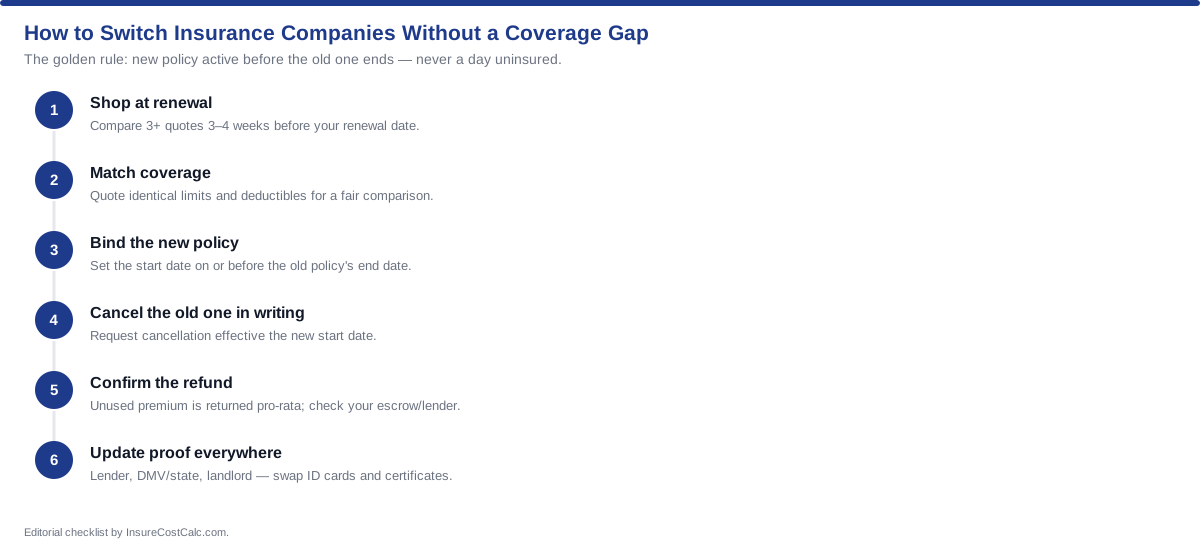
Step 1: Shop and Lock the New Policy
Get quotes from at least three carriers using identical limits and deductibles so the comparison is real. Once you pick one, bind the new policy with a specific start date. Don't cancel anything yet — you're only setting up the replacement.
Step 2: Overlap by at Least One Day
Set the new policy to start one day before the old one ends. An overlap of even a single day guarantees there is never a moment you're uninsured. The old insurer will refund any unearned premium on a pro-rated basis, so you're not paying double for long — but you are buying peace of mind against a gap.
Step 3: Cancel the Old Policy in Writing
Only after the new policy is active and you've received confirmation (not just a quote) should you cancel the old one. Request cancellation in writing or through the insurer's official channel, and confirm the effective date matches the new policy's start. Keep the confirmation email. This prevents the old insurer from auto-renewing and double-billing you.
Step 4: Handle the Logistics
- Auto: update the proof-of-insurance card and notify any lienholder or state database.
- Home: tell your mortgage servicer so escrow and force-placement records stay correct.
- Bundle: if you're splitting home and auto, confirm both lines stay continuous.
Timing by Situation
| Situation | Best approach |
|---|---|
| Mid-policy, no lapse risk | Switch anytime; overlap start dates |
| At renewal | Easiest — new policy starts renewal day |
| After a claim | Finish the claim first; switching mid-claim complicates it |
| Mortgage-backed home | Notify servicer; avoid any gap |
What to Watch at the New Company
- A price that's "too good" — verify identical coverage before trusting it.
- Introductory rates — ask whether the renewal price jumps.
- Missing endorsements — confirm add-ons from your old policy carried over.
Why a Coverage Lapse Is So Dangerous
A lapse - even a weekend - sends a signal to every future insurer that you were briefly uninsured, and the industry reads that as higher risk. The most immediate effect is a "coverage gap" surcharge at the new company that can persist for years, often erasing the savings that prompted the switch. For auto, some states can suspend registration or fine you for driving uninsured even briefly. For a mortgaged home, a lapse can trigger force-placed insurance - the lender buys costly coverage on your behalf and bills you for it. None of this is worth the risk of saving a day; the one-day overlap rule eliminates it completely.
Transferring Your Claims History (the CLUE Report)
Your loss history follows you through a database called CLUE (Comprehensive Loss Underwriting Exchange), which insurers consult when pricing a new policy. It lists prior claims - often for five to seven years - regardless of which company paid them. When you switch, the new insurer will pull your CLUE report; if it contains errors (a claim wrongly attributed to you, or a closed claim shown open), your rate can be unfairly high. You're entitled to a free copy of your CLUE report annually. Review it before switching and dispute inaccuracies with the reporting insurer, because a clean, accurate history is part of what makes the new quote valid.
Refunds, Pro-Rated Premiums, and Escrow
Canceling mid-term entitles you to a pro-rated refund of unearned premium - you shouldn't pay for days you're no longer covered. For an auto policy the refund is straightforward; for a mortgaged home, the refund may go to your escrow account rather than your checking, and your monthly escrow payment could shift once the new premium is known. Notify the mortgage servicer promptly so escrow stays aligned and you aren't double-charged or force-placed. Allow a billing cycle for the refund to process, and confirm in writing the cancellation effective date so there's no dispute about overlap.
Special Cases: Auto Mid-Policy, Home at Renewal, Life
The basic overlap rule flexes by product. Auto mid-policy: switch anytime; overlap start dates and update your state's proof-of-insurance records. Home at renewal: the cleanest moment - set the new policy to start on the renewal date and let the old one simply expire, but still confirm in writing. Life insurance: never cancel an existing policy until the new one is fully approved and in force (life underwriting can decline or rate you up based on new health evidence) - a gap in life coverage is irreversible if you die in between. For every product, the principle is identical: new active before old cancelled.
Switching After a Rate Increase or a Claim
A renewal spike or a recent claim is a common reason to shop, but tactics differ. After a rate increase with no claim, you're in the strongest position - shop aggressively and switch; your record is clean. After a claim, finish it with the current insurer first; switching mid-claim complicates the payout and can look like an attempt to avoid scrutiny. Once resolved, shop with the claim on your CLUE report (it'll appear at the new carrier too, so the savings may be smaller) and choose the best available price for your now-accurate risk profile. Patience here protects both the claim and the future rate.
A Pre-Switch Checklist
| Step | Done? |
|---|---|
| Quoted 3+ carriers, identical limits | [ ] |
| New policy bound, start date set | [ ] |
| New policy active & confirmed | [ ] |
| Old policy cancelled in writing | [ ] |
| Lienholder/state notified (auto/home) | [ ] |
| Overlap of 1+ day verified | [ ] |
Run this list every time you switch. It turns a risky move into a routine, safe transaction - the savings without the exposure.
Switching and Your Insurance Score
In most states, a credit-based insurance score influences your rate, and switching touches it in two ways. First, the new carrier pulls your score as part of underwriting - a soft inquiry that doesn't hurt credit but informs pricing. Second, a coverage lapse (the thing we're avoiding) can depress your score and raise future rates. A clean switch - new policy active before old cancelled - protects the score; a sloppy one damages it. The takeaway: the same discipline that prevents a lapse also protects the score that determines your price, so the "overlap by a day" rule pays off twice.
Stay vs. Switch: A Worksheet
| Question | If yes, consider... |
|---|---|
| New quote 10%+ cheaper, same coverage? | Switch (overlap dates) |
| Recent claim still open? | Stay until resolved |
| Old insurer rating downgraded? | Switch sooner |
| Big life change (move, marriage)? | Re-shop anyway |
Run the worksheet at every renewal; the answer changes as your risk and the market move.
Switching Within the Same Company
"Switching" isn't only changing carriers. You can adjust coverage within your current insurer - raising limits, adding an umbrella, dropping a peril you don't need - and that internal change is the safest possible move because there's no new underwriting and no lapse risk. If your only goal is better-fit coverage rather than a lower price, start by reconfiguring your existing policy; you may solve the problem without any of the timing complexity of changing carriers. Reserve a full switch for when another company genuinely beats your revised, best-configured current policy.
Timing the Switch Around Your Billing Cycle
Most policies bill in advance for a term, so the refund you're owed is for the unused days after cancellation. To avoid double-paying, align the new policy's start with the old one's paid-through date plus the one-day overlap - don't start the new policy a month before the old one expires and pay both for weeks. Similarly, if you pay by credit card or escrow, confirm the old charge is stopped and the new one begins cleanly, and disable auto-renew on the old policy after cancellation so it doesn't rebill you. A little attention to the billing calendar keeps the switch to a single, pro-rated transition with no overlap waste and no gap - the cleanest possible handoff between insurers, and the step most people skip to their cost.
A Final Word: The Overlap Is Everything
If you remember one thing, remember the overlap. New policy active and confirmed before the old one is cancelled - that single discipline prevents the lapse that would erase your savings and trigger surcharges, registration trouble, or force-placed insurance. Everything else (shopping three carriers, matching limits, transferring the CLUE history, handling escrow) optimizes the outcome, but the overlap is what makes the switch safe in the first place. Build the habit, run the checklist, and switching becomes a routine money-saving step rather than a risky ordeal you avoid for years.
Related Articles
How to Choose an Insurance Company
Compare financial strength and complaints
How Much Life Insurance
DIME and human-life-value methods
Health Insurance Subsidies
ACA premium tax credits explained
Bundle Home & Auto
When combining policies saves or costs
Explore State Guides
Texas Insurance
Local rates & requirements
California Insurance
Local rates & requirements
Florida Insurance
Local rates & requirements
Frequently Asked Questions
Yes. You can switch at any time. Your old insurer refunds unearned premium on a pro-rated basis, and your new policy can start the same or next day. The key rule is to overlap the dates so there's never a gap — cancel the old policy only after the new one is confirmed active.
A lapse — even a few days — signals higher risk to insurers and can trigger a surcharge at the new company that outlasts the savings you switched for. In some states it can affect vehicle registration or mortgage requirements. Overlapping start dates by a day avoids it entirely.
Generally yes, on a pro-rated basis for the unused portion of the term once you cancel. Request cancellation in writing and confirm the effective date so the refund and the new policy's start align without overlap confusion.
Finish the open claim with your current insurer first. Switching mid-claim can complicate the investigation and payment. Once the claim is resolved, shop and switch with the usual overlap so you're never exposed.
Yes, for a home policy. Your servicer needs the new proof of insurance so escrow and force-placement records stay correct and they don't buy costly lender-placed insurance on your behalf. Notify them as soon as the new policy is bound.
Related Tools
Car Insurance Calculator
Estimate your monthly premium
Home & Renters Calculator
Estimate home insurance cost
How to Choose a Company
Compare insurers on evidence
Data sources: NAIC, Insurance Information Institute (III). Last updated: July 2026. This article is original editorial content for educational purposes and does not constitute insurance advice; consult a licensed agent for your specific situation.