Buying your first home is a blur of inspections, appraisals, and escrow paperwork — and insurance is the line item most first-timers rush through, only to discover gaps after a loss. Your mortgage lender will not let you close without a policy, but "any policy" is not "the right policy." The dwelling limit has to cover rebuilding, the endorsements have to match your location, and the timing has to clear the lender's review. This guide walks the first-time buyer through every insurance step from offer to closing.
Estimate Your Home Premium
Know your number before you shop so the quote isn't a mystery.
Open the Home & Renters Calculator →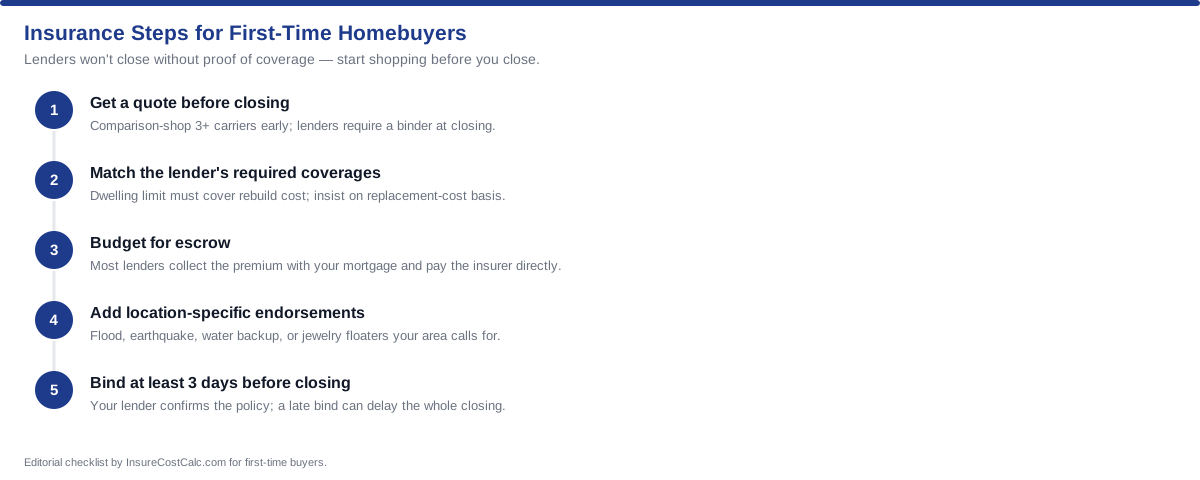
Step 1: Get Quotes Before You Are Under Contract Stress
Start shopping for insurance as soon as your offer is accepted — ideally even before, once you know the area. Compare at least three carriers, not just the lender's suggested insurer (which may be convenient but rarely the cheapest). Having quotes in hand early prevents the closing-day scramble where you grab the first policy that clears the lender and overpay for years.
Step 2: Set the Dwelling Limit to Rebuild Cost, Not Price
The most common and costly first-time mistake is setting Coverage A (dwelling) to the purchase price or the loan amount. Those are not the rebuild cost. A $400,000 home on a $100,000 lot may only need $300,000 to rebuild the structure — but a $400,000 home in a high-cost coastal area might cost $500,000 to rebuild. Insure to the replacement cost of the structure, verified by the insurer's estimator, and insist on replacement-cost basis (not actual cash value) so you aren't shortchanged by depreciation after a loss.
Step 3: Understand What the Lender Requires
Most lenders require the policy to list them as a "mortgagee" (they get paid first in a total-loss claim), carry a dwelling limit at or above the loan amount (or 80–100% of replacement cost), and include certain perils. They do not care whether your belongings limit is adequate or whether you have water-backup coverage — those protect you, not them. Meeting the lender's minimum is the floor, not the goal.
Step 4: Budget for Escrow
Most lenders collect your home insurance premium (and property taxes) through an escrow account built into your monthly mortgage payment. You typically prepay a full year at closing, plus a cushion. This is convenient — you never miss a payment and the lender stays protected — but it means your true monthly housing cost is the mortgage plus escrow, not just principal and interest. Confirm the escrow math so closing funds are accurate.
Step 5: Add Location-Specific Endorsements
Your address dictates the gaps. In a flood zone, buy a separate NFIP flood policy — the standard policy never covers flood. In seismic areas, consider earthquake coverage. With a basement or old sewer line, add water-backup. Owning valuables, schedule them. First-time buyers often skip these because the lender doesn't require them; that is exactly why they matter. See our endorsements guide for the full list.
Step 6: Bind Before Closing Day
Your lender needs a "binder" — proof the policy is active — typically at least three business days before closing so they can review it. A late or rejected binder can delay or derail the entire closing. Bind the policy with a start date on or before your closing date, send the declarations page to the lender and the title company, and confirm receipt. Keep a copy of the binder for your records.
Common First-Time Buyer Mistakes
| Mistake | Why it hurts |
|---|---|
| Insuring to purchase price, not rebuild cost | Underbuilt after a total loss |
| Accepting the lender's first quote | Often not the cheapest |
| Skipping flood / quake endorsements | Catastrophic gaps |
| Binding too late | Closing delayed |
After You Move In
- Document your belongings with photos and a simple home inventory — it makes any future claim far smoother.
- Review at renewal — home improvements (a finished basement, a new roof) change your replacement cost and may require a limit increase.
- Shop again in year two or three — loyalty rarely pays in home insurance; re-quoting catches rate creep.
- Consider umbrella once you have equity and assets to protect (see our umbrella guide).
The Closing-Day Insurance Timeline
A clean insurance handoff looks like this: week 1, request quotes and pick a carrier; week 2, finalize the dwelling limit to replacement cost and add endorsements; 3–5 business days before closing, bind the policy with a start date on or before closing day and send the declarations page and binder to the lender and title company; closing day, confirm the lender has accepted the binder. Build in buffer — a missing signature or a lender question can eat a day. The single most common closing delay is a binder submitted too late or with a dwelling limit the lender rejects.
Mistakes That Delay or Derail Closing
Beyond the late binder, watch for these: a dwelling limit below the lender's required percentage of replacement cost (they'll bounce it back); the policy not naming the correct mortgagee (the lender won't accept it); a start date after closing (creates a coverage gap the lender won't allow); and an unpaid first premium (some binders are conditional on payment). None are hard to fix, but each can cost you a day or more if caught at the wire. Submit early and confirm receipt in writing.
Don't Confuse Homeowners With Title Insurance
At closing you will also be offered title insurance — a separate product that protects against ownership disputes and recording errors, not against physical damage. You typically buy a lender's policy (required) and optionally an owner's policy. Home insurance covers the structure and your belongings; title insurance covers the legal right to own the home. Both appear at closing, both are one-time costs, but they protect completely different things — don't let either be skipped in the paperwork shuffle.
When to Shop Your Home Insurance Again
Many first-time buyers set up a policy at closing and never touch it for a decade — a costly mistake. Re-shop at least every two to three years, because carriers re-price markets constantly and loyalty is rarely rewarded. Also re-quote after any major change: a roof replacement (often a discount), a renovation that adds square footage (raises replacement cost, so raise Coverage A), paying off the mortgage (you can drop the mortgagee and sometimes the escrow), or a drop in your credit-based score. Each event can open savings or expose an underinsurance gap. Treat the policy as a living document, not a closing-day formality.
Read the Declarations Page Before You Sign
The declarations page is the one-page summary of your policy, and you should read it before closing — not after. Confirm four things: the dwelling limit (Coverage A) equals your verified rebuild cost; the deductible is one you can afford; the mortgagee is named exactly as your lender requires; and the endorsements you asked for actually appear. A mismatch on any of these is easier to fix before closing than after a claim. If something looks off, call the agent and the lender together — the few minutes of verification prevent the most common first-time-buyer surprises.
Your Insurance Agent vs. the Lender
These two parties want different things. The lender cares only that the loan is protected — adequate dwelling limit, named mortgagee, proof of coverage — and will accept almost any carrier that meets those minimums. Your agent (or you, shopping direct) should care that you are protected: enough liability, the right endorsements, replacement-cost basis, and a price that fits. Treat the lender's requirements as the floor, not the goal. The agent who explains coverages and gaps — rather than just issuing a binder — is the one worth keeping through closing and beyond.
Discounts First-Time Buyers Often Miss
First-time buyers can usually stack several legitimate discounts that meaningfully lower the first year's premium. A new-home discount applies when the home is recently built or freshly renovated, since newer systems — roof, wiring, plumbing — are lower-risk to insure. Bundling home and auto with one carrier typically cuts 10–25%. Installing a monitored security or sprinkler system, upgrading to impact-resistant roofing, going paperless, and paying the annual premium in full instead of monthly all earn credits with most carriers. Ask the agent to itemize every discount you qualify for; carriers won't always volunteer them, and the savings compound across the life of the policy.
Related Articles
What Is Homeowners Insurance?
Coverages & exclusions
Home Endorsements
Close the gaps
NFIP Flood Insurance
What flood policies cover
Read Your Dec Page
Verify your limits
Explore State Guides
Florida Insurance
Local rates & requirements
California Insurance
Local rates & requirements
Texas Insurance
Local rates & requirements
Frequently Asked Questions
At minimum, lenders require a policy that names them as mortgagee, carries a dwelling limit near the loan amount (or 80–100% of replacement cost), and covers common perils. They do not require adequate belongings or liability limits — those are your call. Meeting the lender minimum protects them, not necessarily you.
No. Coverage A should equal the cost to rebuild the structure, which can be higher or lower than the price (price includes land, which you don't insure, and market premiums). Insure to verified replacement cost and choose replacement-cost basis so depreciation doesn't shortchange you after a loss.
A binder is temporary proof that your policy is active, issued before the formal policy documents. Your lender needs it — usually at least three business days before closing — to verify coverage. Without an accepted binder, the closing can be delayed or canceled.
No. You are free to shop any licensed carrier. The lender's suggestion is often just a referral and rarely the cheapest. Comparing three quotes typically saves hundreds per year — money you keep for the life of the policy.
Never. Standard home policies exclude flood, including storm surge and groundwater. You must buy a separate NFIP or private flood policy, and your lender will require it only if you are in a mapped high-risk flood zone. Given that many flood claims occur outside those zones, buying it anyway is often wise.
Most lenders collect the annual premium through your monthly mortgage payment and pay the insurer directly from escrow, so you don't mail a check. You prepay a year at closing plus a cushion. It simplifies budgeting but means your true housing cost includes escrow, not just principal and interest.
Related Tools
Home & Renters Calculator
Estimate home insurance cost
Flood Insurance Calculator
Estimate NFIP premiums
Umbrella Insurance Calculator
Estimate extra liability cost
Data sources: NAIC, Insurance Information Institute (III). Last updated: July 2026. This article is original editorial content for educational purposes and does not constitute insurance advice; consult a licensed agent for decisions specific to your situation.