Here is the trap most new-car buyers don't see until it is too late: the moment you drive off the lot, your car is worth less than you paid — and if you financed it, you may owe more than it is worth for years. If that car is totaled or stolen, your auto insurer pays the vehicle's actual cash value, not your loan balance. The gap between those two numbers is money straight out of your pocket. Gap insurance exists to cover exactly that gap. Whether you need it depends on your loan terms and depreciation curve.
Estimate Your Auto Premium
See how your loan and car value affect your total cost of ownership.
Open the Car Insurance Calculator →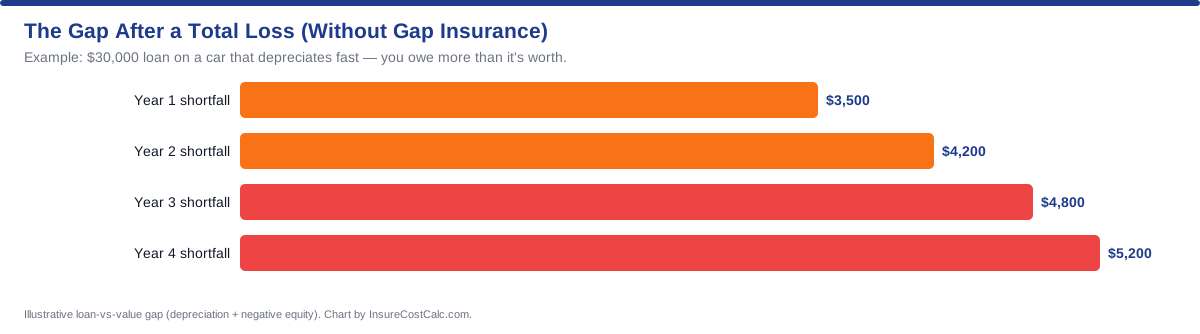
What "Gap" Actually Means
Gap = your loan payoff (plus certain fees) minus your car's actual cash value (ACV) at the time of a total loss. New cars depreciate fast — often 20–30% in the first year alone. If you put little or no money down, rolled negative equity from a trade-in into the new loan, or took a long loan term (72–84 months), you can be "upside down" by thousands. Gap insurance pays that difference so you aren't making loan payments on a destroyed car while also buying a replacement.
How a Total-Loss Claim Plays Out
Imagine a $30,000 loan on a car that, one year in, is worth $22,000 after a crash. Your collision coverage pays the $22,000 ACV (minus your deductible). But you still owe $25,500 on the loan. That $3,500 difference — plus the deductible — is what gap insurance would cover. Without it, you pay it yourself. Over several years of a long loan, that gap can actually grow before shrinking, as the chart shows.
Who Should Strongly Consider Gap
- You put little or no money down — financing close to 100% of the price.
- You rolled negative equity from a trade-in into the new loan.
- You took a long loan term (72+ months) — depreciation outpaces principal paydown.
- You drive a fast-depreciating brand or a high-volume model with weak resale.
- You leased the vehicle — lease contracts almost always require gap (often built in).
Leases vs. Loans
Gap is nearly always included in a lease (it is baked into the contract and required), so don't pay for it twice. On a purchase loan, gap is optional and you buy it separately — either from the dealer (usually the most expensive), through your auto insurer as an endorsement (usually the cheapest, often $20–$60/year added to your premium), or via a credit union. The insurer add-on is almost always the better deal than the dealer's finance-office price.
When You Can Skip Gap
If you made a large down payment (20%+), have a short loan term, or your loan balance has already fallen below the car's value, gap is unnecessary. A quick check: if you totaled the car today, would your ACV exceed your payoff? If yes, you have no gap to insure. Reassess each year as the loan amortizes — most people only need gap for the first couple of years of a loan.
What Gap Does NOT Cover
- Your deductible — gap pays loan-vs-value, not the collision deductible you still owe.
- Mechanical breakdowns — gap is for total loss/theft, not repairs.
- Overdue payments or late fees — some policies exclude lapsed loans.
- Extended warranties or add-ons you financed — gap typically covers the vehicle loan, not the extras rolled in (read the fine print).
Cost Comparison
| Source | Typical one-time cost |
|---|---|
| Dealer (financed into loan) | $500–$900 |
| Auto insurer endorsement (per year) | $20–$60 |
| Credit union / standalone | $200–$400 |
Buying gap from your auto insurer as an annual endorsement is almost always cheaper than the dealer's upfront price — and you can drop it the moment you are no longer upside down.
A Quick Decision Rule
- Leasing? Gap is already there — don't buy more.
- Bought with <20% down or rolled-over equity? Buy insurer gap for the first 1–3 years.
- Paid 20%+ down on a short loan? Probably skip it; recheck annually.
- Buying from the dealer? Decline their gap and add the cheaper insurer endorsement instead.
A Detailed Worked Example
Suppose you finance $30,000 for a new car with $2,000 down, so your starting loan is $28,000. In month 13 the car is totaled. Depreciation plus the rolled-in fees mean the insurer values it at $21,000; your collision deductible is $500, so the payout is $20,500. Your loan balance, after a year of principal payments, is still $25,500 (because early payments are mostly interest). The gap is $25,500 − $20,500 = $5,000 — money you owe on a car you no longer have, on top of needing a new down payment. Gap insurance would have paid that $5,000. Without it, that money comes from savings or a higher new loan. For a $40/year endorsement, it is hard to justify skipping when you are even modestly upside down.
Gap vs. New-Car Replacement Coverage
These sound similar but differ. Gap pays the loan-vs-value shortfall in cash; new-car replacement pays for a brand-new equivalent vehicle if yours is totaled within the first 12–24 months. New-car replacement is more valuable (you get a new car, not just debt relief) but is only offered by some carriers and only on new cars, and it costs more. If your priority is simply not owing on a destroyed car, gap is sufficient; if you want to avoid the depreciation hit entirely, ask whether new-car replacement is available on your policy.
Gap on a Paid-Off or Highly-Depreciated Car
If you paid cash or your loan balance is already below the car's value, gap has nothing to pay — skip it. The same logic applies to older used cars: once the vehicle is worth more than you owe, the product provides no benefit and the premium is wasted. Reassess at every renewal; the moment your payoff drops below the car's market value, cancel the endorsement and keep the savings. Many drivers keep paying for gap for years after they no longer need it.
Lease Gap vs. Loan Gap Nuances
Lease gap and loan gap share the name but differ in detail. On a lease, the "gap" also covers the lessor's early-termination charges and remaining payments, and it is almost always included in the contract — you are not buying a separate product. On a purchase loan, gap covers only the loan-balance shortfall (and sometimes the deductible, depending on the policy), and you buy it à la carte. If you lease, confirm gap is present and don't duplicate it; if you finance, buy the cheaper insurer endorsement and drop it the moment you are right-side up. The mechanics are the same idea — owe more than it's worth — but the paperwork and who provides it are different.
Gap and Negative Equity From a Trade-In
The most dangerous gap scenario is rolling an old car loan into a new one. If you owed $6,000 on a trade-in and financed it into a $30,000 new-car loan, you start $6,000 upside down on day one — before depreciation even begins. Combined with a long loan term, that gap can persist for years and grow. If you are in this situation, gap insurance is not optional; it is the only thing standing between a total loss and a five-figure bill on a car you no longer own. Pay down the negative equity aggressively, or shorten the loan term, to escape the gap sooner.
Adding Gap to a Policy You Already Have
If you bought a car and skipped gap at the dealer, you can usually add it later through your auto insurer as a mid-term endorsement — you don't have to wait for renewal. Call your carrier, ask for "loan/lease payoff coverage," and the premium is typically prorated and added to your next bill for a modest annual cost. This is almost always cheaper than the dealer's upfront price and lets you cancel the moment you are no longer upside down. Review your loan balance against the car's value each renewal; the day they cross, drop the endorsement and keep the savings.
Related Articles
Car Coverages Explained
Collision, comprehensive & more
Adding a Teen Driver
Why premiums spike
Lower Your Car Insurance
12 proven savings tactics
Deductible vs. Premium
The break-even math
Explore State Guides
Texas Insurance
Local rates & requirements
California Insurance
Local rates & requirements
Florida Insurance
Local rates & requirements
Frequently Asked Questions
Sometimes, but less often than on a new car. Used cars depreciate slower and you may have put more down, shrinking the gap. It is still worth it if you financed a high percentage of a late-model used car with little down or rolled-over equity. Check whether your loan balance exceeds the car's value — if not, skip it.
In almost all leases, yes — gap protection is built into the lease contract and required by the lessor. You should not pay for a separate gap policy on a lease; that would be double coverage. Confirm it is listed in your lease paperwork before declining anything.
Usually your auto insurer. The dealer's gap is typically a one-time charge of $500–$900 financed into the loan (so you pay interest on it), while the insurer's gap endorsement often costs just $20–$60 a year and can be cancelled the moment you are no longer upside down. Decline the dealer version and add the insurer endorsement instead.
No. Gap pays the difference between your loan payoff and the car's actual cash value. Your collision deductible is a separate amount you still owe out of pocket on a total-loss claim. Some "total loss" products bundle deductible coverage, but standard gap does not.
Only while you are upside down — typically the first one to three years of a loan with little down. Once your loan balance falls below the car's market value, cancel the endorsement and stop paying for coverage you no longer need. Recheck at each renewal.
Your collision or comprehensive coverage pays the car's actual cash value minus your deductible. You remain responsible for the remaining loan balance. If you were upside down, you owe that difference out of pocket while also needing a new car — which is exactly the scenario gap insurance is designed to prevent.
Related Tools
Car Insurance Calculator
Estimate your monthly premium
Umbrella Insurance Calculator
Estimate extra liability cost
Home & Renters Calculator
Estimate home insurance cost
Data sources: Insurance Information Institute (III), NAIC. Last updated: July 2026. This article is original editorial content for educational purposes and does not constitute insurance advice; consult a licensed agent for decisions specific to your situation.